Saturday, February 19, 2011

Shutter Shack Prepares for Hurricane Season!

Just as our miserable winter is hopefully coming to an end, now we have to focus on what might be our next peril . . . The never ending fear of a major hurricane striking the NY Metro area, especially, our home . . . Long Island! . . . not to mention the whole Northeast in general.
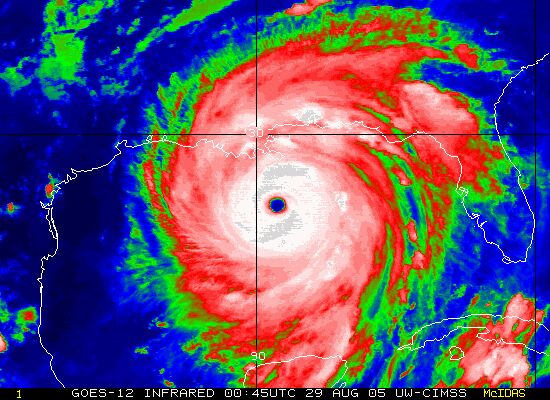


We at Shutter Shack pride ourselves with being one of the foremost companies to provide multiple Storm Protection Products, as well as providing expert advise concerning protecting your home.  Unfortunately, we have become very complacent in regard to a massive storm similar to one the likes of  "Hurricane Katrina" or "Hurricane Andrew" striking the NY/Metro area. 

According to the United States Landfalling Hurricane Probability Project of 2010 there is a 90% probability that the NY City/Long Island area will be hit with a major hurricane (category 3 or more) within the next 50 years. We are LONG overdue! (no pun intended, Long Island) for a major hurricane.

The last big Hurricane that hit Long Island was Gloria in 1985. Since that time there has been a ten-fold increase of construction, and development in our direct hurricane danger zone's. If a storm similar to the
 "Great Long Island Express"  strikes our area, Gloria will be minuscule in scale compared to that 1938 storm.


Gloria came in as a minimal category 2 storm and caused over $900 million in economic loss.  For you that remember, there were certain area's which didn't have power for over 2 weeks, Dune Road in the Hampton's was totally under water and some homes on the East End of Long Island washed away. Imagine all this damage,  and Gloria struck at low tide! If a storm such as the '38 storm were to strike today, the damage would be similar to the horrible images we witnessed during the Katrina catastrophe. Loses in our region might top over $100 billion! Everything south of Merrick Road could be under water!

                                    (Here's an old newsreel about the '38 storm)

The NYC/Metro area is ranked the 3rd most dangerous area in the USA for a major hurricane.  It is a fact that the NY/Metro area is in a very precarious geographical hurricane location. (Here is a YouTube Video if you are really curious!).

We have been receiving more and more calls about storm protection from home owners and businesses being "proactive".

We  just finished a large project at a Westchester Country Club using our Storm/Hurricane Panels.
These affordable lightweight Aluminum or Clear panels interlock and create a substantial barrier between your home and harsh exterior elements. They are lightweight, easy to install and store, and don't impede on the exterior details of your home. They even meet tough Florida Hurricane codes.

We also carry many other Hurricane/Storm as well as Security Protection Products that may suitable for many different solutions. 
At Shutter Shack we consider ourselves to be a service orientated business. Feel free to call or email us if you any questions, or comments concerning our products or website. We always strive to please our customers and better ourselves. We sell only top quality products with top quality customer service.
 
Thanks
Bruce


Wednesday, February 2, 2011

Shutter Shack Introduces our new product..."DIY Shutter Kits"

Traditional 1 1/4" (Shutterettes) are becoming more and more difficult to find.  We have in the past used some overseas companies that offered a shutter that did not meet our quality standards.  Now we are proud to offer a "Made in the USA" high quality Interior Traditional Louver Shutter Kit.
DIY Shutter Kits
http://shuttershack.com/products/intshutters/shutter-kits-main.htm
Our Bass Wood DIY Shutter Kits come Unfinished, with all necessary hardware and mounting accessory's.
These shutters can be trimmed to suit your needs, and ordered in either paint or stain grade woods.
Please feel free to call or email us if you have any questions.

We are also looking into manufacturing for the Spring, (if it ever arrives), a "Shutter Plant Stand"

Friday, January 7, 2011

Welcome to the Shutter Shack Blog!


Welcome to our "Shack Blog"

My name is Bruce, owner of  Shutter Shack.

Through our Blog we will seek to provide our customers with information, answer questions, and will keep the public informed of new and innovative products.

Please watch for our website improvements and updates.

Currently we are working on our "How to Install Custom Shutters" manual.

This book will be available free of charge for all our customers who make a shutter purchase or for a nominal fee, available online.

Also, on an ongoing basis, we will post photo's of current jobs both with before and after images for your own brainstorming ideas.


Here is an image of a job we are currently working on, where we are going to apply exterior "Storm Panels Shutters".

We will post the "after" photo once the Storm Panels are installed.


Please feel free to call, email, or fax us any questions you may have concerning any of our products.

We are also looking to start a "Installer/Contractor Resource List."
If you are mechanically proficient or have carpentry experience, let us know, our customers may be interested using your expertise.


Wednesday, January 5, 2011

"Shutters, not just another pretty face!"


Like many architects who design homes, when clients ask for windows flanked by shutters, I shudder.

Shutters have long challenged the modernist aesthetic sensibility of American architects, primarily because architects view most shutters as fakery.

Shutters seem especially alien to contemporary facade compositions because non-traditional window and door patterns, state-of-the-art construction materials and details, and sometimes complex exterior wall "topographies" do not lend themselves to shutters.

So why are shutters so ubiquitous?

Chalk it up to popular taste. Most Americans prefer traditional styled homes, no matter how historically incorrect. And shutters served a function. Today, most are inoperative, a kind of non-functional, referential emblem whose purpose is solely decorative.

Take away the shutters, though, and most homeowners are likely to feel that their houses appear naked, cheap and deprived of style.

Shutters on today's houses often share common characteristics.

They are usually too narrow in relation to window size. Even if they could be closed, they would not fit over the windows properly. Often shutters are placed only on the front facades facing streets, not on visible side facades, and rarely on rears. This saves money but serves to underscore the role of shutters as pure ornament. And most are made of vinyl or aluminum, not wood, the material from which shutters historically have been fabricated.

Thus the modernist critique of ersatz shutters is partly about authenticity. If you want to live in a dwelling that aspires to look as if were built 200 years ago, why not correctly replicate shutters installed 200 years ago?

But the architectural critique also relates to the original function of louvered shutters: to simultaneously provide privacy and natural ventilation; to filter daylight; and to help insulate against summer heat and winter cold.

In fact, operable shutters have long been a simple and effective architectural element. Fundamentally, they are environmental control devices.

With architectural sustainability becoming a major issue for designers, developers and builders, and increasingly a government policy concern, it's time to rethink shutters.

Why not use shutters that really work? With 21st-century technology, a modern shutter could contribute significantly to improving energy efficiency and comfort.

Operable shutters-- pivoting, sliding or rolling -- could have arrays of adjustable louvers to respond to varying environmental and human needs. Shutters could be made of different materials, even glass, which today can range from transparent to translucent to opaque.  And shutters also could be an integral component of pre-engineered window systems, well insulated and detailed to form tight seals when completely shut.

When it's cold, or at night, shutters could be closed either manually or automatically, to substantially reduce heat loss -- via conduction, convection and radiation -- through window frame and glazing. By trapping a layer of still air between shutter and window, and by blocking the wind, a shutter can greatly enhance the comfort of occupants.

When it's hot, shutters could be positioned not only to shade windows from direct sunlight, but also to insulate against heat gain through thermal conduction, in turn reducing air-conditioning loads and increasing comfort.

Of course, shutters can be opened and closed at will to frame views or to ensure privacy and security purposes that have served for centuries.

However, for modern shutters to succeed, they must be designed to be opened, closed and adjusted easily. And they must be easy to maintain.

I don't doubt that a 21st-century shutter could be fashioned to look either traditional or contemporary. But no matter what the style, let's at least make shutters that are real, that do some work for us, and that contribute something measurable to our planet's sustainability.

Roger K. Lewis is a practicing architect and a professor of architecture at the University of Maryland.